Image Source: Instagram
Photo By: Rinaldo Sata
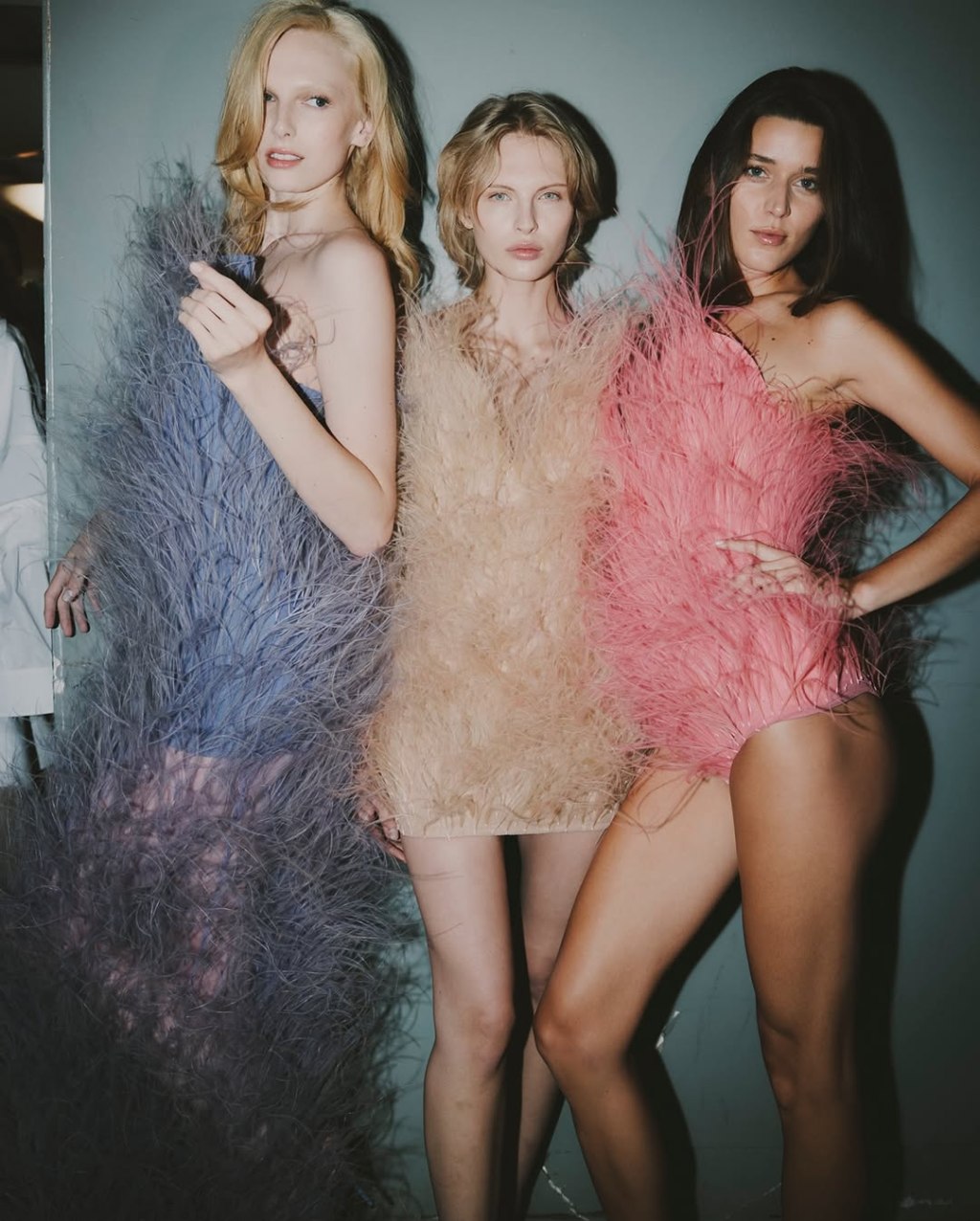
At her SS26 Paris Fashion Week Show, sustainable designer Stella McCartney introduced Fevvers, a revolutionary plant-based, cruelty-free alternative to feathers developed by a UK startup. Fevvers aims to replicate the look and feel of real feathers without the use of plastic in production or any harm to animals, offering the first ethical solution to traditional feathers in fashion. Without the demand for real feathers, the number of birds killed each year for their feathers will decrease dramatically.
At her SS26 Paris Fashion Week Show, sustainable designer Stella McCartney introduced Fevvers, a plant-based, cruelty-free alternative to feathers developed by a UK startup. Fevvers aims to replicate the look and feel of real feathers without plastic or animal harm, offering the first ethical solution to traditional feathers in fashion.
When discussing her collaboration with the Fevvers startup, McCartney said, “The innovation is just insanely beautiful,…It’s not only the world’s first plant-based feather alternative, but it’s also proof that brands who continue to use feathers are choosing cruelty over creativity.” In recent years, consumer demand for sustainability in fashion has increased. As more brands move away from traditional fur, animal skins, and leather, they are seeking alternatives that are comparable to the originals.
Until recently, there haven’t been many advancements in alternative feather options. Fevvers co-founders James West and Nicola Woollon discussed this “blind spot” in fashion, with Woollon stating, “Brands tell me some of their bestsellers were feather-covered, but have stopped producing them due to the ethical concerns. A credible alternative will be transformative.” When looking for a brand to partner with, McCartney was the most natural choice due to her history with sustainable fashion. McCartney has pioneered the shift towards sustainable alternatives in luxury fashion. She built her brand on rejecting the use of animal products in her designs, instead choosing to be the first to craft garments using products like Mylo mycelium leather, Sequinova plant-based sequins, and now Fevvers.
Right now, Woollon and West are working on stabilizing the product for commercial use as the material is too fragile to pass quality-control standards for mass-produced fashion. Woollon jokes that Stella, ever the pioneer, demanded to use it now despite it not being ready for commercial release. When talking about what differentiates their product from the rest, West explains that “…each feather has a uniqueness, like a fingerprint. It hasn’t come out of a uniform manufacturing line. That natural irregularity gives it beauty.” Not only is each feather one-of-a-kind, but it’s nearly indistinguishable from real feathers. West continued, “This material passes the second-glance test — you look at it and assume it’s real. That’s the distinction.”
Woollon conceived the idea after mistaking a plant with feather-like features in an art installation for real feathers. Applying embroidery techniques from ostrich feathers, Woollon realized the plant could achieve a similar texture and appearance. The co-founders have opted not to disclose the exact plant while the product is still under development.
For West and Woollon, Paris was a launchpad and a test to see if they can generate enough market demand to get funding. The previously self-funded company is currently preparing for its first pre-revenue seed round to finance research and accelerate product development. West explains that while there is no limitations in what color they can be dyed, they won’t be able to fully replicate everything an ostrich feather can do. They’re currently working on producing small capsule collections with select brands, like McCartney.
The fact that Fevvers was able to debut during Paris Fashion Week has already proved that anything is possible in the world of sustainability. West and Woollon have already seen the potential for a “huge” market with industries beyond fashion potentially interested, including theatre and film. As they work to scale their product to be commercially viable, it will be interesting to see if it can become an industry standard, like lab-grown silk, and if Fevvers can become a go-to source for feather production.
 Books By Style
Leave a comment